
Kilberry Parish Church

Tarbert harbour with Free Church (left) and Parish Church (right) in the background
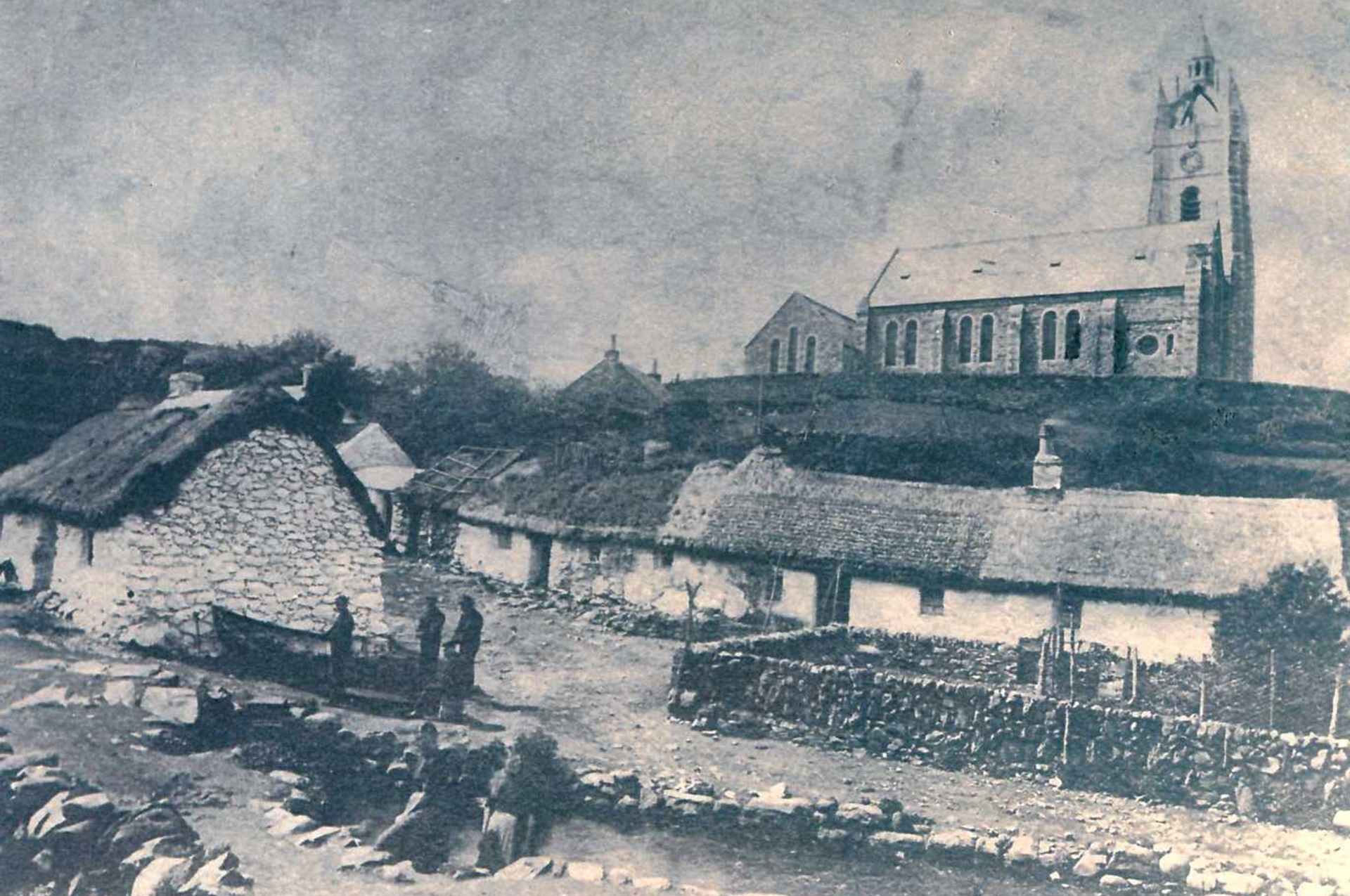
Thatched cottages on Church Street (Back Street) with the parish church on the hill to the rear, 1903.
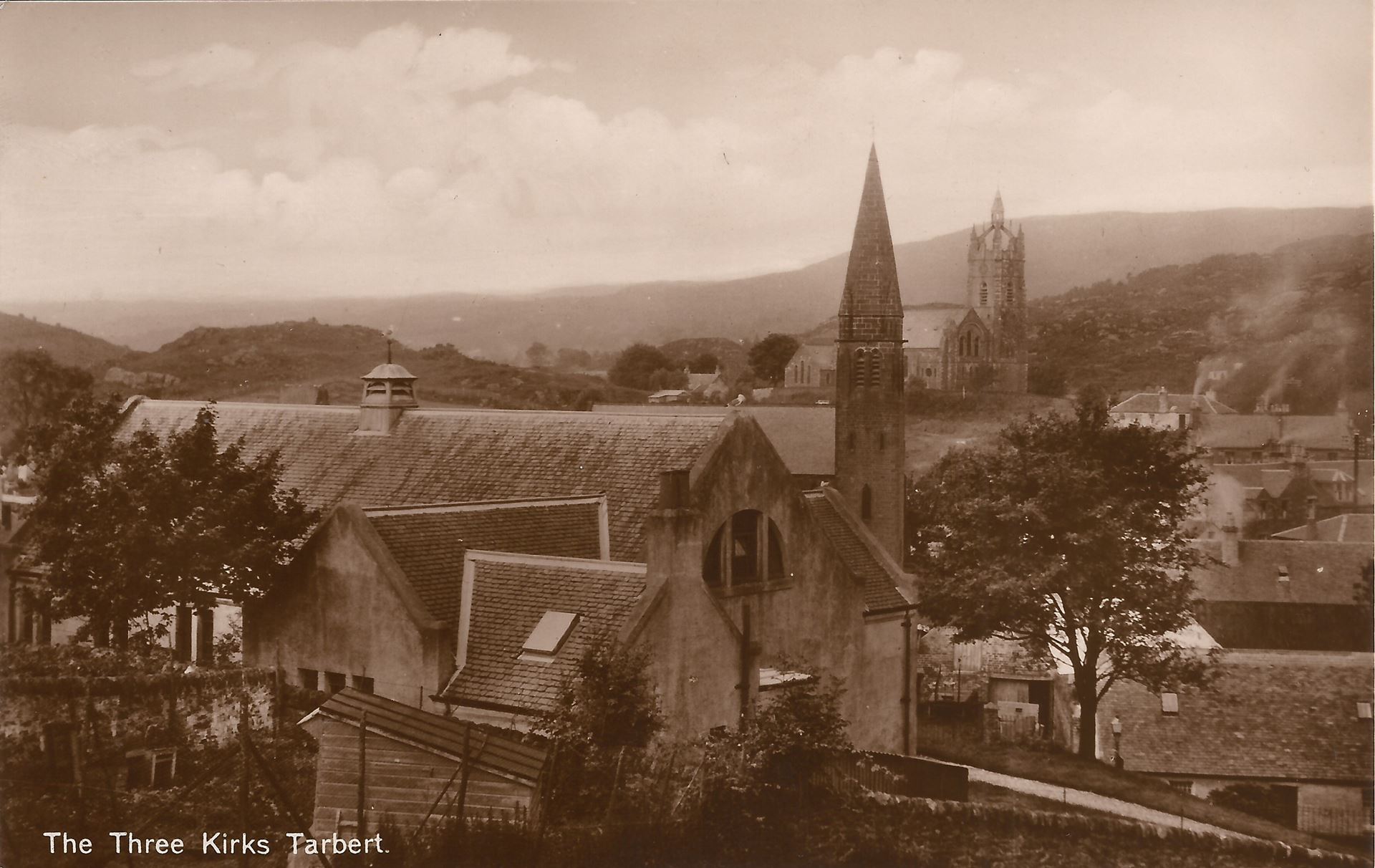
The three kirks of Tarbert
Churches (continued)
Kilberry Parish Church
Kilberry Parish
Church ground
is linked with
Tarbert Parish Church, and is a small Georgian style category B
listed building dating back to 1821. The church itself
is set in farming and forestry surroundings and is
situated 12 miles from Tarbert, and 4 miles short of
Kilberry.
St. Brendan's Church
St Brendan's Church is a small country church,
designed by Bertram Vaughan Johnson around
1896–7. It is C listed. It has walls of local grey stone
with red sandstone
margins. The east gable
is ornamented with a
small Celtic cross. The
lancet windows have
leaded lights. It is
situated beside the
Skipness River, within
sight of the sea, and the
end of the first section of the Kintyre Way. It is 13
miles from Tarbert, with magnificent views of the
Arran hills. It is linked with Tarbert Parish Church.
Old Free Church
The Free Church congregation in Tarbert dates from
1843, when the Free Church broke away from the
Church of Scotland in a long-running dispute over
landowners appointing ministers to parishes against
the wishes of the congregations. Many landowners
were hostile to the new church because of this and
the local lairds, the Campbells of Stonefield, refused
to allow the new congregation to meet in any
building or barn on their land. As a result, the
congregation met for two winters in the local
graveyard.
When, eventually, a site for a church was obtained,
against the laird's wishes, he then refused to allow
the congregation to use the stone from his quarries.
However, the congregation who were mostly
fishermen, decided to cut the stone themselves on
the other side of the loch, and carry it back to Tarbert
in boats. A church was then built to the rear of the
present day Anchor Hotel.
At the same time, teachers who joined the Free
Church were dismissed from the parish schools, and
so the congregation set up its own school. This was
handed over to the School Board in 1872 and the
building, now enlarged many times over, is the
present day Tarbert Academy.
The Free Church
By the 1880s, sites were no longer a problem, and it
was decided that a much bigger church was
needed. Legend has it that Sir William MacKinnon,
founder of the British India Steam Navigation
Company, offered to provide a larger building for the
Free Church, which had just been built in Clachan,
but ironically, this offer was turned down as it did not
have a steeple.
In 1896 the present church was opened with seating
for 700, complete with a steeple, which rose to a
height of 110 feet. There were 3 services each
Sunday; two in English, and one in Gaelic with many
people attending all three.
The steeple, however, was constructed from red
sandstone, and
suffered from
water ingress.
Tragically, a
local tradesman
was killed when
he fell while
trying to repair it.
In the interwar
years, it was
decided to
remove the upper part of the steeple, and finally, in
the 1950s, the remainder.
Today, the congregation is smaller, with Gaelic
services long discontinued. The tradition of singing
psalms unaccompanied, which many people
associate with the Free Church, is still maintained,
but hymns and
musical
instruments
now form part
of the
congregation's
weekly worship.
The United Free Church
The United
Free sometimes called the ‘Established Church’ in
Church Street, built in 1908, has a modest Arts and
Crafts gabled nave by Alexander Cullen of Hamilton
and is now a private dwelling. This church is now a
private dwelling.